
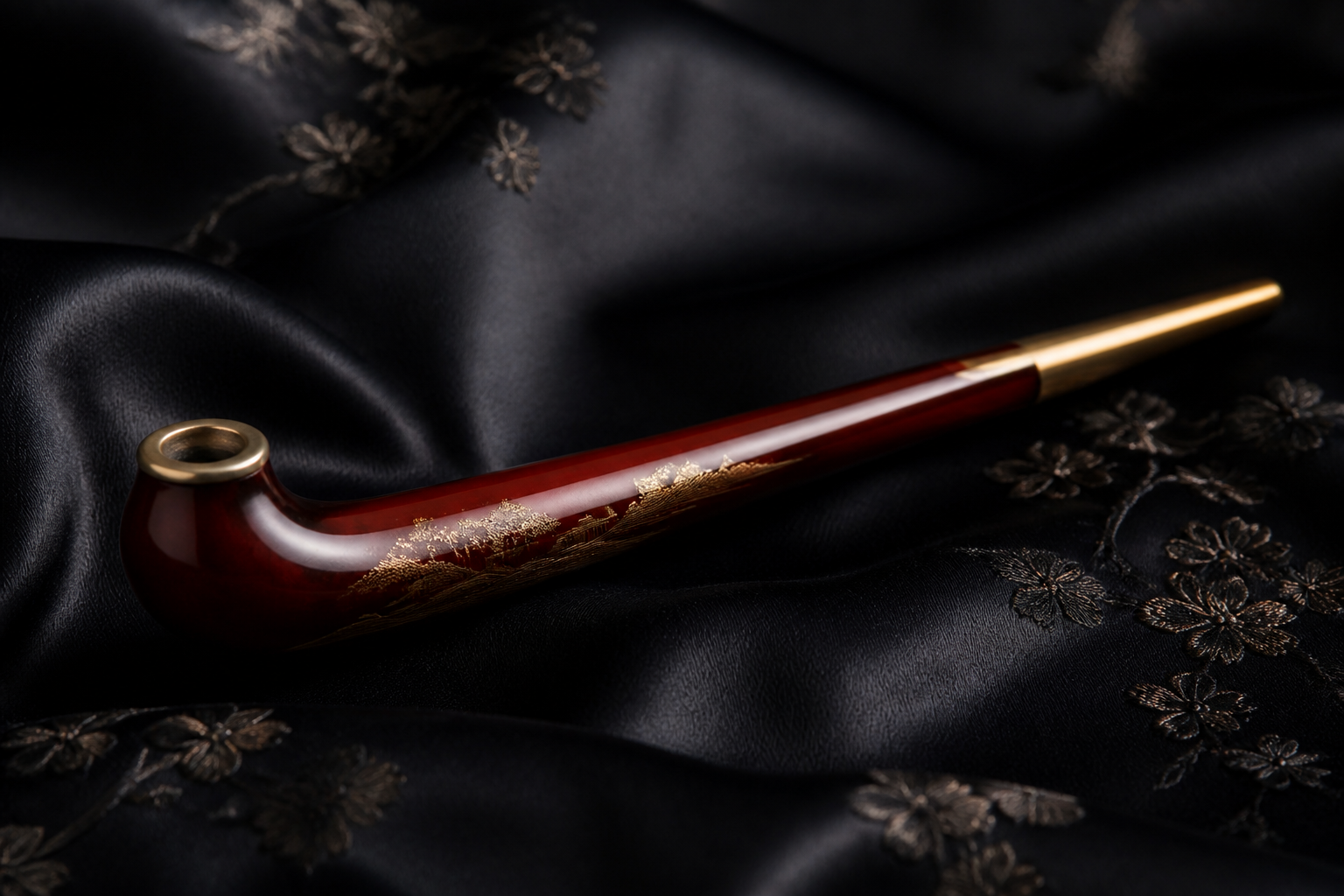
Should You Smoke Urushi Pipes? Value vs. Character in Japanese Lacquerware
The Choice: Collect or Enjoy?
Urushi pipes occupy an unusual space. They are genuinely smokeable tobacco pipes, not ornaments. Yet many people who own them never light them, treating them as investments or display pieces. The question of whether to actually smoke one cuts to something deeper: do you own beautiful things to preserve them, or to experience them?
What Makes Urushi Pipes Special
Urushi is a lacquer made from the sap of the Asian sumac tree, a crafting technique with roots going back over 9,000 years in Japanese art. Creating a single urushi pipe is labor-intensive: the lacquer is filtered and mixed with pigment, brushed onto the pipe body in careful layers, then suspended and left to cure—sometimes for weeks or months. The finest examples, especially limited handcrafted pieces like Tsuge’s Ikebana line, represent hundreds of hours of skilled work.
The result is a finish that is both beautiful and genuinely durable. Urushi develops a subtle depth and richness over time, responding to use and exposure in ways that mass-produced finishes cannot.
The Investment Argument
You’re correct that smoking will lower the resale value. A pristine urushi pipe in original condition commands higher prices from collectors. Light smoking, wear on the rim, color shifts—these are visible signs that the pipe has been used, and that distinction matters in secondary markets.
But there’s a counterargument worth considering: Japanese lacquerware, including urushi pieces, has historically become more beautiful and valuable as it ages with proper care and use. Unlike briar wood pipes that can develop character through smoking, urushi’s value story is different. It’s not about the patina of use so much as the integrity of the lacquer itself.
If You Decide to Smoke
The key constraint is moisture and harsh chemicals. After smoking, empty and wipe the bowl thoroughly—moisture trapped in the wood damages both the briar and the lacquer over time. Never use alcohol-based cleaners on the exterior of the pipe, as this can damage the urushi finish. The interior (the stem and airway) cleans like any pipe: pipe cleaners and gentle alcohol when needed.
The rim itself will show wear. A lacquered rim will develop tiny chips and color shifts with use. Whether that becomes a cherished patina or a flaw depends entirely on how you frame it—and whether you care about resale.
The Deeper Question
Collecting pristine urushi pipes makes sense if you value preservation and the potential financial upside. But there’s also something to the samurai image you mentioned: the idea of an object made to be used, improving through careful handling over decades. A smoked urushi pipe tells a different story than a mint one. Neither is wrong.
If you own one and you’re drawn to actually smoke it, the practical answer is straightforward: yes, you can. Just keep the exterior dry, avoid solvents on the lacquer, and empty the bowl after every smoke. Your individual pipe will be happier for it, even if the collector’s market wouldn’t be.