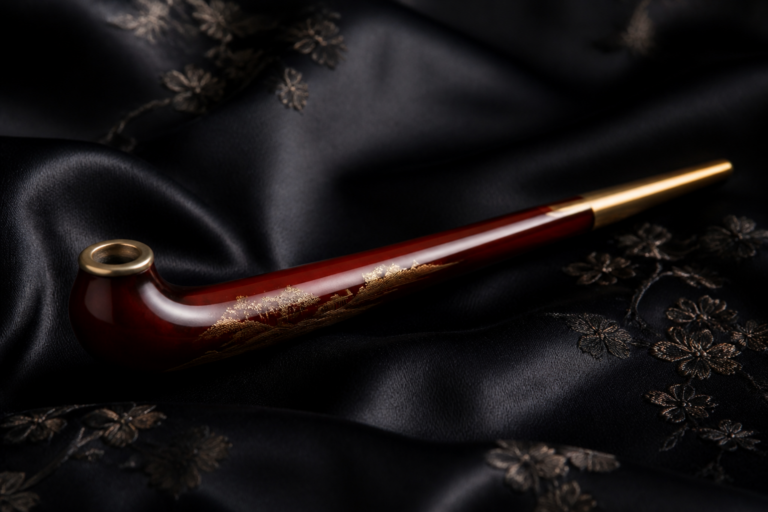
Using Your Urushi Pipe: Smoking, Care, and Patina
The Truth About Smoking Urushi Pipes
Urushi pipes aren’t heirlooms to be locked away. They’re tools made for regular use. If you’ve been hesitating to smoke one, here’s the key fact: Japanese makers like Tsuge design these pipes expecting them to be smoked, and the urushi lacquer finish is durable enough to handle it.
What Makes Urushi So Durable
Urushi is created from the sap of the Asian sumac and has been refined for over a thousand years. The lacquer is naturally water-repellent, antibacterial, and resistant to alcohol and oil. More importantly for pipe smoking, it’s stable at temperatures well over 300°C (570°F), so the heat from your tobacco won’t damage the finish.
The curing process is time-intensive—some pieces take up to eighteen months to complete—but the result is a finish that doesn’t degrade. This is key: urushi doesn’t break down. It evolves.
How Patina Develops on Urushi
This is where the original poster’s romantic image of patina actually aligns with reality. As you smoke an urushi pipe over time, the surface will develop a subtle sheen and deepening of tone. This isn’t damage—it’s the lacquer aging, the surface responding to use and exposure.
For antique Japanese lacquerware, collectors recognize two things: naturally aged patina from genuine use adds character and authenticity to older pieces, while pristine condition commands the highest prices in contemporary markets. For a modern pipe you intend to smoke, this distinction matters less than it might for a 200-year-old decorative bowl.
The Investment Question
Yes, smoking a pipe will reduce its value as a mint collectible. A pristine, unsmoked Tsuge urushi pipe is worth more than one with a decade of smoking under its belt. But here’s the thing: that’s the choice these pipes present. You’re not destroying them by smoking—you’re using them for their intended purpose.
This choice has precedent. During Japan’s Edo period, samurai and wealthy merchants carried kiseru (traditional smoking pipes) as both functional tools and status symbols. Those pipes were made to be used. Some of the most valued antique kiseru on the market today are pieces that show genuine patina from a century or more of use.
Caring for an Urushi Pipe While Smoking It
If you decide to smoke your pipe, a few care practices will keep it looking and smoking well:
- Maintain stable conditions: Store it away from radiators, air conditioners, and direct sunlight. Extreme temperature swings and humidity fluctuations can stress the lacquer.
- Clean gently: After smoking, use a dry cloth or soft brush. Avoid aggressive washing or soaking the bowl.
- Accept the patina: Minor darkening around the rim and light smoke staining are part of the pipe’s journey. They’re not flaws.
- Keep it dry: Don’t leave moisture sitting on the finish for extended periods.
The Samurai’s Waterfall
Your image of an ancient samurai smoking one of these beauties overlooking a waterfall isn’t just romantic—it’s historically rooted. Kiseru were designed to be portable, beautiful, and functional all at once. The patina that developed on a samurai’s pipe over years of use told a story.
Modern urushi pipes from makers like Tsuge carry that same philosophy. They’re meant to develop a story through use, not remain frozen in time. Smoking yours isn’t degrading a collectible. It’s honoring the reason these pipes were made.