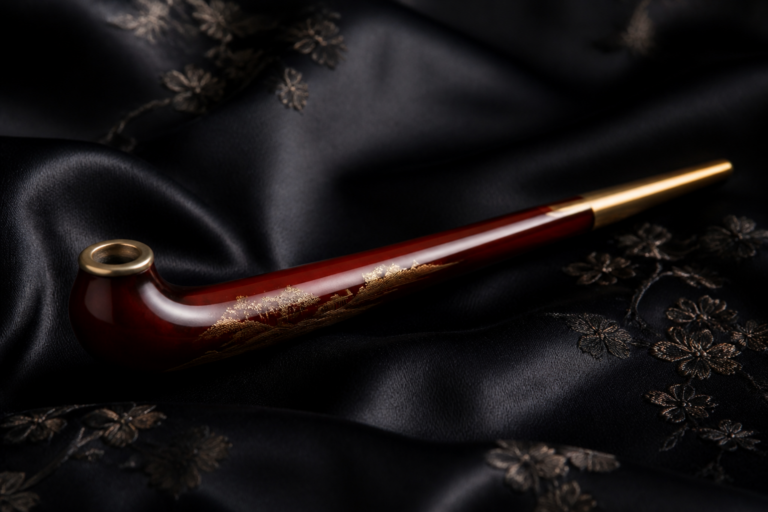
To Smoke or Keep: The Urushi Pipe Collector’s Dilemma
The Urushi Pipe: Art, Function, and the Collector’s Choice
Urushi pipes represent a beautiful intersection of functional craftsmanship and fine art. Made by Japanese makers like Tsuge, these pipes feature traditional Japanese lacquer finish applied to briar wood bowls. The catch? Urushi pipes occupy an unusual space in the pipe world: they’re genuinely designed to be smoked, yet they’re valuable enough that many people hesitate to do so.
What Is Urushi Lacquer?
Urushi is a natural lacquer derived from the sap of the Asian sumac tree, refined over centuries into one of the world’s most durable finishes. The application process is labor-intensive and expensive—some pieces take months or even over a year to complete. The lacquer creates a vibrant, rich surface with a deep shine that doesn’t require buffing to maintain. This durability is key to understanding Urushi pipes.
Designs are often created through a technique called “maki-e,” where intricate patterns are meticulously applied to the lacquer surface. Common motifs include sakura blossoms, Mount Fuji, camellias, and seasonal themes. The craft has been refined in Japan since at least the eighth century, making these pipes genuine carriers of traditional aesthetics.
Can You Actually Smoke Them?
Yes. Urushi pipes are functional tobacco pipes, not merely decorative objects. You’ll find estate Urushi pipes listed with condition ratings like “smoked but nearly mint,” indicating these pipes have genuinely been used for smoking by their previous owners. The lacquer finish is not harmed by tobacco smoke or the normal moisture present in pipe smoking. The finish was designed to withstand regular use.
The Value Question: Pristine vs. Patina
Here’s the real dilemma you’ve identified. Condition is one of the most straightforward measures of pipe value. A new, unsmoked Urushi pipe will be worth more than an identical one with visible smoke damage, bowl cake, or stem bite. If you’re buying with resale value in mind, smoking one will reduce its market value.
However, this doesn’t mean a smoked pipe is worthless. Well-maintained smoked pipes retain significant value, and estate Urushi pieces are sought after precisely because they’re real pipes used by real smokers. The patina that develops—bit wear on the stem, oxidation of the briar rim, subtle discoloration—actually tells a story. Many experienced smokers value a pipe that’s been properly enjoyed over one that’s never been touched.
If You Decide to Smoke It: Care and Maintenance
If you choose to enjoy your Urushi pipe rather than keep it museum-sealed, basic pipe maintenance will keep it in good condition:
- Rest it properly: Between smokes, rest the pipe with the mouthpiece up and bowl down so moisture evaporates naturally. Let it cool fully before putting it away—at least an hour.
- Clean the stem weekly: Bend a pipe cleaner into a U-shape, dip it in pipe sweetener, and swab out the mortise to prevent buildup.
- Monitor the cake buildup: The inside of the bowl develops a protective cake of burned tobacco, but excessive buildup can trap moisture. Most pipe smokers gently remove excess cake without stripping it entirely.
- Treat the Urushi gently: While the lacquer is durable, avoid dropping the pipe or subjecting it to hard impacts. The briar underneath is wood and can crack.
- Occasional cleaning: A soft cloth can keep the exterior lacquer looking fresh without needing any harsh polishing.
The Real Choice
Your instinct is sound. Yes, an Urushi pipe will lose collector value if smoked. But these pipes were created to be smoked, and they’re built to endure regular use. The aesthetic that develops—the worn rim, the changing patina, the deepening character—is precisely what appeals to many pipe smokers.
The practical answer depends on your priorities. If you’re investing in Urushi pipes as collectibles, store them carefully and enjoy them visually. If you’re a pipe smoker who values Japanese craftsmanship and traditional aesthetics, an Urushi pipe is genuinely worth smoking. The durability of the lacquer means you won’t be harming the pipe by using it as intended. And if you ever decide to sell it, a well-maintained smoked Urushi pipe is still a desirable piece in the pipe world.
Either way, you’re in good company—plenty of experienced collectors face this exact choice, and there’s no “wrong” answer. The beauty of these pipes is that they work both ways.