Converting a Warehouse into a Climbing Gym: A Complete Construction Guide
Warehouse Conversion for a Climbing Gym: From Cleanup to Code Compliance
Converting an industrial warehouse into a climbing gym requires careful planning across multiple domains: structural engineering, drainage systems, safety codes, and facility design. Day 1 often looks like the forum post above—dirty, physical work clearing inherited problems from previous tenants. But that cleanup is just the foundation for the serious building work ahead.
Clearing Drainage Systems: More Than Shovels and Buckets
Standing water, clogged drains, and sewer backups are common discoveries in older warehouse conversions. The manual removal of gravel and accumulated sediment is a first step, but professional cleaning goes much deeper.
Commercial drain cleaning typically uses two main approaches. Drain snaking works well for localized blockages and is usually the first method a plumber tries. For more stubborn buildup—grease, mineral deposits, and years of sediment—hydro jetting is the industry standard. This method uses a high-pressure stream of water, similar to a pressure washer but with a specialized spray head that scours the inside of the entire pipe system.
For a warehouse being converted to a climbing gym, getting the full line scoped and cleaned to the municipal sewer connection is essential. Any remaining blockages won’t just drain poorly—they can back up into your new facility, especially during heavy use or wet weather. Commercial drain systems should be inspected and cleaned every 18 to 22 months to prevent future problems.
Structural Engineering and Building Code Requirements
Once drainage is sorted, the real structural work begins. A climbing gym facility needs substantial structural capacity because rope anchor points and climbing walls place significant loads on the building itself.
Building code requirements vary by region. Europe has adopted comprehensive standards like EN 12572-2:2017, but in the United States, there are industry recommendations rather than mandatory federal codes. However, local building departments almost always require structural engineering review and approval before construction begins.
Professional engineering teams conduct due diligence reviews, surveys, geotechnical investigations, and foundation assessments to determine whether the existing warehouse structure can safely support climbing walls, belay stations, and the concentrated loads climbers will place on the facility. Temporary bracing, wall reinforcement, and roof modifications are often necessary.
Facility Size and Ceiling Height
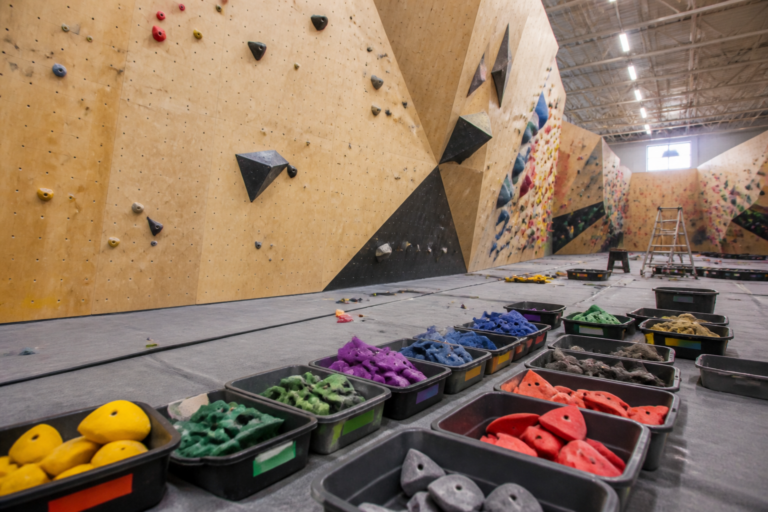
A viable climbing gym needs at least 10,764 square feet of usable space with ceilings no lower than 20 feet to accommodate rope climbing routes and bouldering walls. Larger warehouses allow for phased construction, where you build the core climbing areas first and add amenities like a café, yoga studio, or training area as revenue grows and the business stabilizes.
Safety Flooring and Landing Zones
Unlike rope climbing, where harnesses distribute the load, bouldering creates concentrated impact forces on the floor below. North America currently lacks mandatory standards for climbing gym flooring (though Europe has developed specific guidelines), but industry best practice calls for:
- Safety padding extending 6 to 8 feet beyond where the wall angles out
- For bouldering floors, at least 1 inch of padding per foot of fall height
- Closed-cell route flooring systems at least 2 inches thick for superior impact protection
The flooring you choose affects both climber safety and long-term maintenance costs, so this is not an area to cut corners during construction.
The Climbing Wall Association Standards
Even without mandatory U.S. federal codes, the Climbing Wall Association (CWA) publishes design and engineering standards that most professional gyms follow. These standards cover wall design, anchor point spacing, fall zones, and equipment specifications. Many local building departments reference CWA standards when reviewing climbing gym permits, so compliance is practical even where it’s not legally required.
Planning for Phased Construction
The most successful gym conversions don’t try to finish everything at once. Building the core climbing areas first—a mix of rope and bouldering walls—lets you open and generate revenue while planning future expansions. Adding training spaces, community areas, or additional wall sections as the business matures spreads out capital costs and lets you respond to what your actual climbers want.
A full-scale climbing gym conversion typically costs between $500,000 and several million dollars, depending on the size of the space and finish level. Starting with the essentials and growing smart makes financial sense.
Don’t Forget the Boring But Critical Details
Drainage, electrical capacity, HVAC for a large occupied space, emergency egress, and accessibility compliance aren’t exciting, but they’re what inspectors scrutinize. Warehouse conversions especially need careful attention to ventilation—sealed spaces with concentrated foot traffic and heavy use can develop humidity and air quality problems quickly.
The day-one drain cleanup is just the visible part of a much larger, more technical project. Professional help—engineers, architects, and licensed contractors familiar with climbing facilities—is not optional for a commercial-scale gym.