
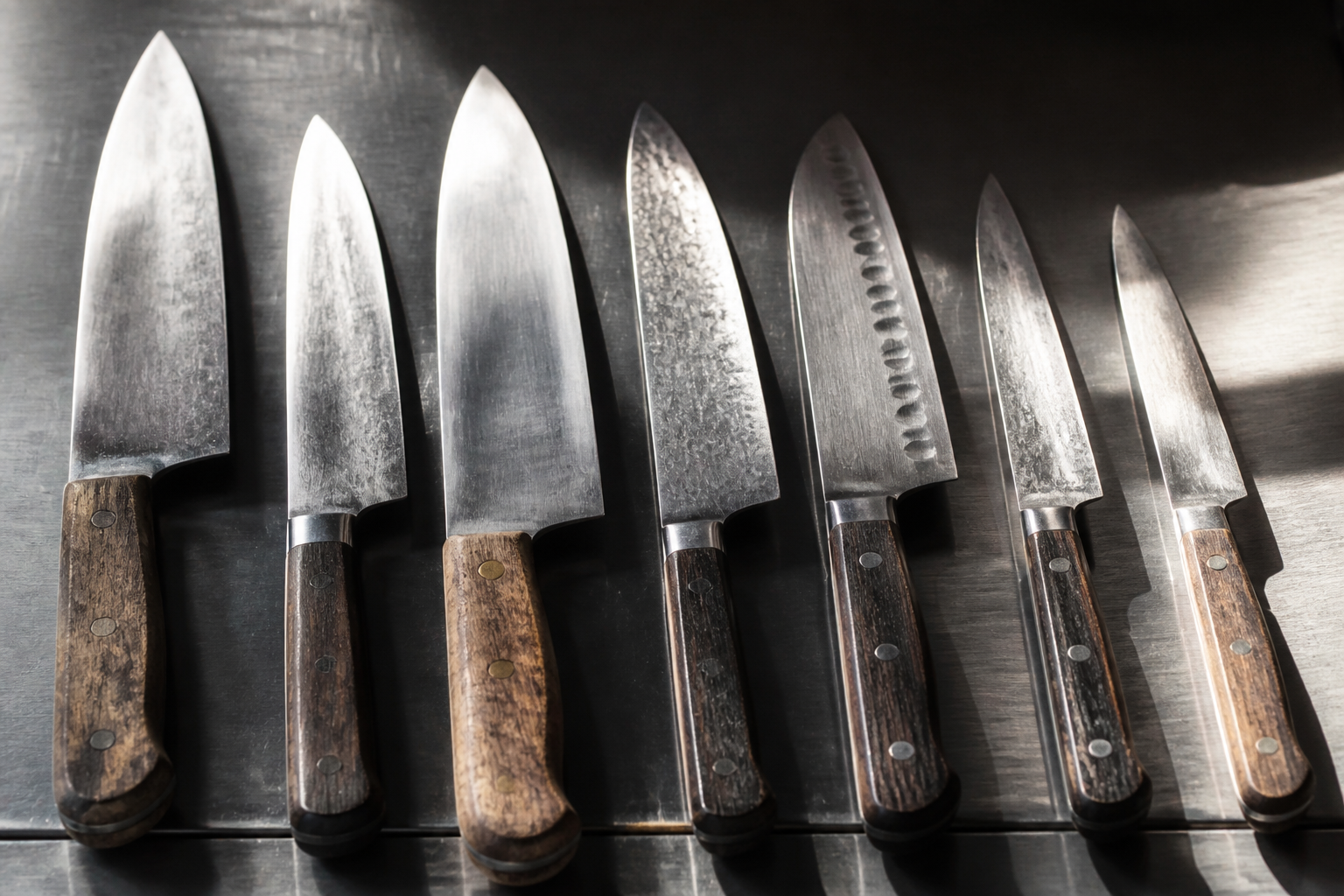
Understanding Dexsteel: The Proprietary Steel Behind Professional Dexter Knives
What is Dexsteel?
Dexsteel is a proprietary high-carbon, high-alloy stainless steel developed and used exclusively by Dexter-Russell in their commercial cutlery. Because it’s proprietary, the exact composition isn’t publicly disclosed, but it’s engineered as a high-carbon grade blend—similar in structure to 400-series stainless steels commonly found in commercial cutlery.
The steel is specially heat-treated and ice-tempered to a Rockwell hardness of approximately 54 to 56 HRC (Hardness Rockwell C scale). This softer temper is intentional.
Why the Softer Hardness?
Dexsteel’s softer hardness was designed with one goal: durability under extreme use. When a butcher strikes bone with a boning knife, a blade tempered to 54–56 HRC will safely roll or bend slightly rather than shatter or develop a large chip. This toughness matters for tools that see hundreds of repetitive cuts daily.
The trade-off is edge retention. Softer steel dulls faster than harder steel. But for professional butchers, quick and frequent honing between cuts keeps the blade sharp enough for clean, precise work.
How It Compares to Victorinox
The original post suggests Dexsteel is roughly equivalent to Victorinox, maybe a little softer—but the numbers tell a slightly different story. Victorinox knives also measure 55–56 HRC, putting them almost identically hard to Dexsteel. Both are European-style steels optimized for softer tempers that can take abuse.
The real difference isn’t hardness—it’s design. Dexter blades are typically heavier, stamped production items built for commercial dishwashers and heavy-duty environments. Victorinox knives target home cooks and lighter restaurant use. Both steels reward frequent honing and both dull faster than harder Japanese-style steels (typically 59–61 HRC).
Dexsteel in Sani-Safe Knives
The affordable Sani-Safe line—with its textured white polypropylene handles and seamless blade-to-handle seals—does use Dexsteel. These aren’t budget compromises but rather commercial-grade tools designed to survive hot dishwashers, hard cutting boards, and minimal maintenance. They’re among the most trusted knives in commercial kitchens precisely because they’re engineered for durability, not prestige.
The Steeling Maintenance Ritual
Butchers don’t sharpen their knives that often. Instead, they steel them—using a honing rod to realign the microscopic teeth on the blade edge that bend during cutting. A smooth honing steel can restore a rolled edge to shaving-sharp in three seconds.
This works best on softer steels like Dexsteel. The blade edge bends and deforms easily during use but realigns just as easily with a steel. On harder Japanese blades, steeling is less effective because the edge doesn’t bend as much—it chips or breaks instead.
The “diminishing returns” the original post mentions is real: steeling fixes alignment, not wear. If the blade is actually dull (worn, not just bent), a steel won’t help—only a whetstone or sharpening system can remove metal and restore true sharpness. A butcher using a steel ten times a shift will eventually hit that wall.
Why Professionals Trust Dexsteel
Dexsteel’s softness is a feature, not a flaw, for heavy commercial use. The steel tolerates abuse without shattering. It accepts quick honing that keeps it workable during shifts. It resists staining and cleans easily. For a tool that spends 8–12 hours a day in hard use, those traits matter more than edge retention measured in hours of cutting soft tomatoes.
Sources
- katom.com
- knifeindex.com
- therationalkitchen.com
- dexterrussellcutlery.com
- prudentreviews.com
- therationalkitchen.com
- scienceofsharp.com
- food-prep.com