What’s a Normal Engine Coolant Temperature? The Real Range Explained
The Standard Coolant Temperature Range
Most modern cars operate optimally between 195 and 220 degrees Fahrenheit. This is the window where cooling systems are engineered to work best, balancing efficient combustion with safe operating conditions.
The 185°F to 225°F range you may see cited is close, but edges the boundaries. At 185°F, an engine is still warming up and running less efficiently. At 225°F, standard coolant mixtures reach their boiling point—they’ll continue to function if the system stays pressurized, but you’re operating near the limit.
Why Engine Temperature Matters for Fuel Economy
There’s a direct link between engine temperature and fuel efficiency. Cold engines waste fuel because fuel injectors don’t vaporize gasoline as completely, and engine friction is higher. In optimal ranges, combustion is cleaner and more complete.
Research shows that even small shifts matter: for every 5°C (about 9°F) increase in water temperature in the efficient range, fuel economy improves by roughly 2–3%. This is why engines run deliberately hot within safe limits—to maximize efficiency and meet emissions standards.
The Dodge Dart and Hot-Running Engines
The Dodge Dart is indeed engineered to run warm. Many compact, efficient engines deliberately operate near the upper end of the normal range to optimize combustion. For the Dart specifically, real-world data shows temperatures between 170°F under light highway cruising and 230°F in stop-and-go city traffic, with the cooling fan cycling to keep things in check.
Running warm isn’t a sign of trouble if you’re seeing these numbers under normal load. It’s the design.
The Active Grill Shutter System (AGS)
The Dart’s AGS system controls shutters behind the front grille. In warm weather or at highway speeds where engine cooling isn’t critical, these shutters close to reduce aerodynamic drag. At low speeds or when the engine needs more cooling, they open.
This small change improves fuel economy by reducing the engine’s workload against wind resistance. Every 10% cut in drag translates to measurable MPG gains on the highway. The system became standard on the 2013 Dart specifically as part of FCA’s strategy to meet Corporate Average Fuel Economy (CAFE) standards.
Understanding CAFE Standards
CAFE regulations set a manufacturer’s fleet-wide average fuel efficiency target. For a company like Fiat Chrysler, shaving even 1 MPG across all models adds up to billions of dollars in fines or credits. Active cooling systems, variable valve timing, turbocharging, and grille shutters are all tools engineers use to push efficiency up without changing the fundamental engine design.
The Dart’s warm operating temperature, combined with the AGS system and other efficiency features, helps FCA meet these mandates while keeping the engine responsive and durable.
When to Actually Worry
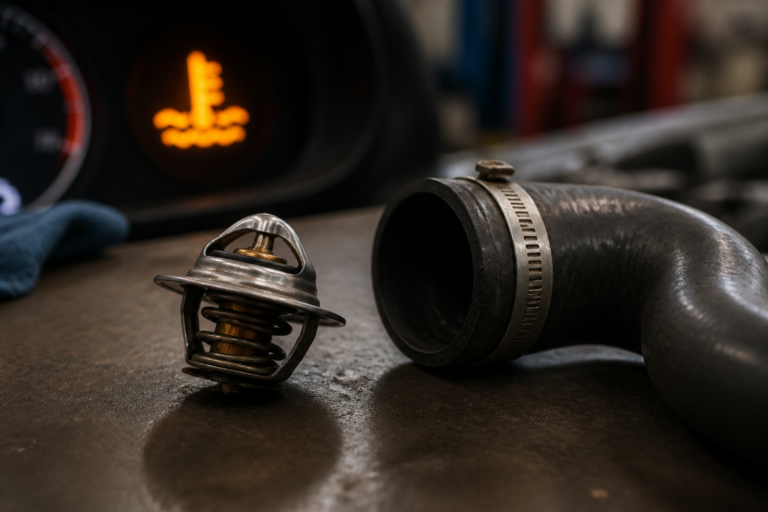
If your coolant temperature creeps above 230°F consistently under normal driving, or if you see warning lights, get the thermostat and cooling fan inspected. A faulty thermostat stuck partially closed can cause gradual overheating. But steady readings in the 200–230°F range during city driving or under load? That’s normal for the Dart.
The opposite problem—running cold—is worth noting too. If your gauge barely moves above 170°F after 20 minutes of highway driving, the thermostat may be stuck open, and you’re losing both efficiency and heat in the cabin.
Sources
- kseal.com
- itstillruns.com
- rxmechanic.com
- en.wikipedia.org
- chase.com
- carparts.com
- hpacademy.com
- just-auto.com
Related Articles