
Why 180-Degree Thermostats Trigger Check Engine Lights (And Why They’re Bad)
Why 180-Degree Thermostats Trigger Check Engine Lights (And Why They’re Bad)
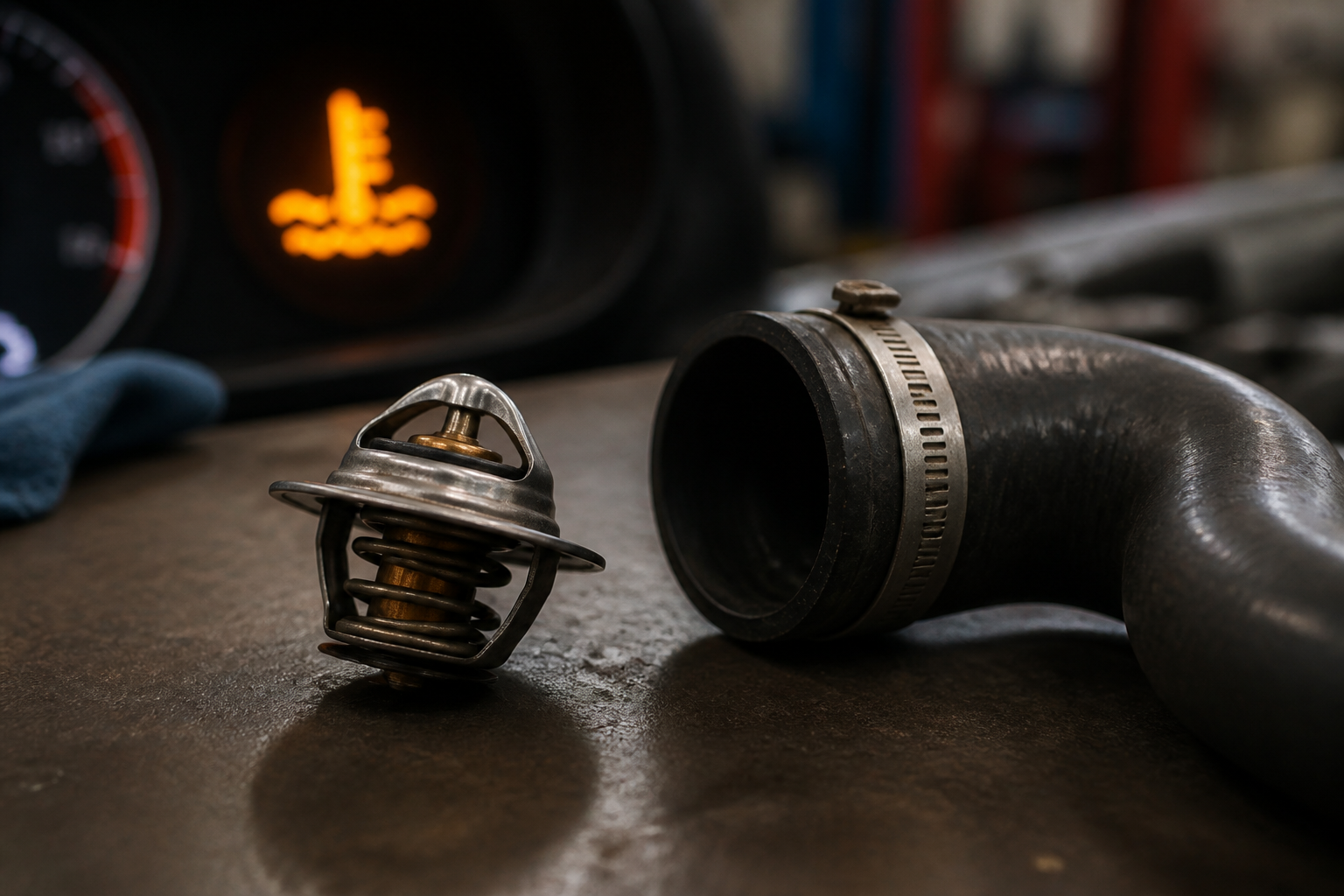
A simple thermostat swap seems harmless. In practice, it’s become one of the most problematic DIY modifications in car forums. The check engine light in cold weather that the original poster experienced? That happens to almost everyone who tries it, and there’s a solid mechanical reason why.
The Thermostat Basics
Your car’s thermostat controls when coolant circulates through the engine. Stock thermostats open at 195°F—that’s the design temperature for your engine. A 180-degree version opens at 180°F instead, allowing coolant to flow earlier.
People install them for two reasons:
- The belief that cooler operation improves performance
- A “safety margin” on hot days with AC running
Neither holds up in practice. Engines are tuned to run at their design temperature, and cooler doesn’t mean better.
Why the Check Engine Light Appears
When you install a 180-degree thermostat on a car calibrated for 195, you trigger the P0128 code: “Coolant Temperature Below Thermostat Regulating Temperature.” The engine computer expects the coolant to reach 195°F. With a 180 installed, it maxes out around 180–185°F instead. The computer can’t achieve its target temperature within the required time window, so it logs an error.
Cold weather intensifies the problem. On winter mornings, the engine takes longer to warm up anyway, making it nearly impossible to hit 195°F. The check engine light becomes routine.
Beyond the Light: Real Engine Damage
The check engine light is a symptom of deeper problems. Running at 180°F causes measurable harm:
- Engine wear: Ring clearances are engineered for 195°F. At 180, rings don’t seal properly, increasing blow-by and accelerating cylinder wear.
- Fuel economy: The engine stays in open-loop warm-up mode longer, dumping extra fuel. You lose 1–2 mpg.
- Emissions: Catalytic converters need to reach operating temperature quickly. Cooler running means they stay cold longer, raising emissions.
- Oil condition: Motor oil is viscosity-balanced for 200–210°F operation. Cooler temperatures speed up fuel dilution and water absorption.
When a 180-Degree Thermostat Actually Makes Sense
Track racing. Full stop.
At the racetrack, heat soak—where the car overheats and performance drops—is a real issue. A 180-degree thermostat, combined with a reprogrammed fan setup, keeps the engine cooler and more consistent lap to lap. Race teams use them by design, often targeting 185°F at the start line and 190–195°F by the checkered flag.
The catch: you can’t just bolt one in. Custom fan programming, coolant management, and an ECU reflash are usually necessary. On the street, the hassle and mechanical damage aren’t worth it.
The Bottom Line
Your car’s 195°F thermostat isn’t arbitrary. Engineers calibrated the fuel map, emission controls, cooling system flow rates, and oil circulation around that temperature. A 180-degree swap creates conflicts across all of them.
If your engine actually runs hot, the cause is elsewhere: a failing radiator, a bad fan clutch, or a weak water pump. Swapping the thermostat won’t solve those problems—it’ll just create new ones.
Sources
- carparts.com
- samarins.com
- obdeleven.com
- autoexpro.com
- bgautomotiveinc.com
- grimmermotors.co.nz
- motorad.com
- hybrid-racing.com