
Why 180-Degree Thermostats Trigger Check Engine Lights (And Why They’re Bad)
Installing a 180-degree thermostat causes P0128 check engine codes in cold weather and damages your engine. Learn why it doesn’t work for street driving.
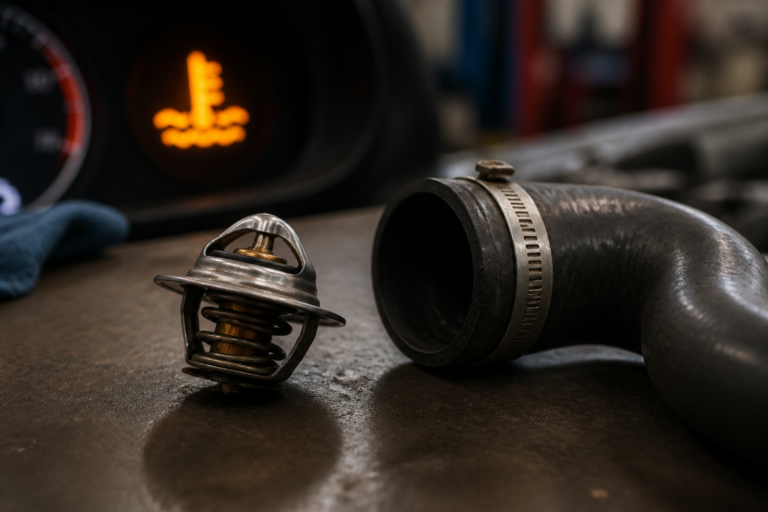
Installing a 180-degree thermostat causes P0128 check engine codes in cold weather and damages your engine. Learn why it doesn’t work for street driving.
Dual-zone climate control uses multiple temperature sensors strategically placed throughout your cabin. Learn where they’re located and how they work together to maintain separate temperatures.
The 453 Turbo’s complex cooling system makes DIY gravity drains unreliable. Learn why professional power flushing removes 95% of old coolant versus 50% with simple drain-and-fill.
185–225°F falls close to normal for many cars, but the sweet spot is typically 195–220°F. Here’s what coolant temperature means for your engine and fuel economy.
Your freshly sealed car needs the right tools to stay looking great. Learn what equipment, supplies, and techniques form a solid basic detailing kit for home maintenance.
Your cruise control fuse is fine but the buttons won’t respond. Here’s what’s actually causing it and how to troubleshoot beyond the fuse box.
When you disconnect your car battery, the ABS and steering systems lose their calibration. Learn why the light comes on and four proven methods to reset it without a scan tool.
Shifter design doesn’t determine transmission speed. Here’s what actually tells you whether you have a 6, 8, or 10-speed automatic—and why the dial-vs-lever rule is misleading.
A stuck relay, bad ground connection, or weak battery cell can drain your car’s battery while parked. Learn how to identify which one and why buzzing sounds matter.
With proper maintenance, Tiburons commonly exceed 200,000 miles and can reach 300,000+. At 100K miles, your biggest concern is the timing belt—and it needs immediate attention if not already replaced.