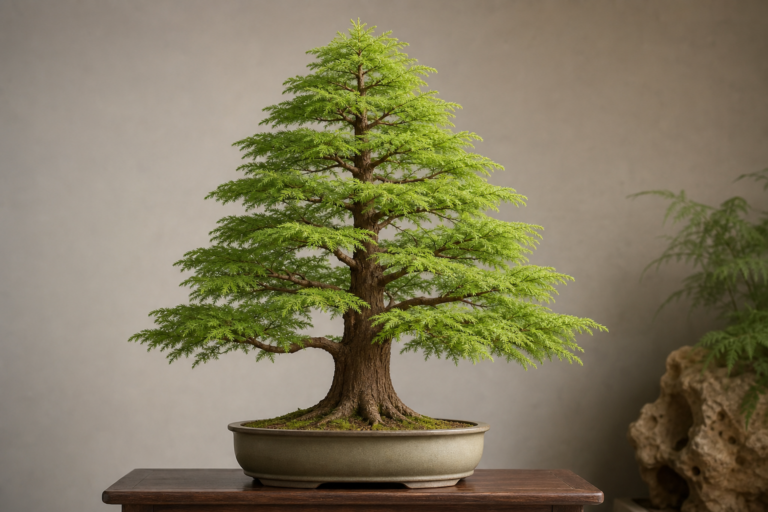
Hawaiian Snow Bush Bonsai: Mastering the Delicate Art of the Broom Style
Hawaiian Snow Bush Bonsai: A Rewarding Challenge
The Hawaiian Snow Bush (Breynia nivosa, also called snowbush) is a tropical bonsai species with dense, fine foliage that suits the broom style unusually well. It’s also demanding. Get the conditions wrong and it drops its leaves fast. Get them right and it grows vigorously, branches finely, and builds one of the more convincing canopies in tropical bonsai.
Understanding the Delicate Nature
The sensitivity here is specific. Temperatures below 50°F stress the plant. Letting the soil dry out completely triggers leaf drop. So does moving the tree abruptly from bright light to a dim spot. None of these triggers are unpredictable — the care is consistent, not particularly complicated.
That sensitivity comes with a payoff: when conditions are stable, Breynia nivosa develops fine ramification — the dense, intricate branching that takes years in slower species — at a pace that’s genuinely faster than most bonsai subjects. That speed is why growers put up with its fussiness.
Why Broom Style Works So Well
The broom style (hokidachi) calls for a single straight trunk that divides into multiple branches at a fixed height, building an open, rounded canopy. The trunk covers roughly the lower third of the tree’s total height; the crown takes the upper two-thirds. Hawaiian Snow Bush branches in exactly the right direction for this without much forcing. Young trees can reach a believable broom silhouette faster than most hardwood species — not quickly by garden-plant standards, but noticeably quicker than the typical bonsai timeline.
Wiring and Shaping Techniques
Snow bush branches are flexible but brittle. They snap more easily than hardwood bonsai species. Use aluminum wire — 1–2mm gauge covers most branches — and resist the urge to tighten it beyond what’s needed for a gentle redirect. Forcing a branch into position immediately is how you lose it.
Work from the lowest branches upward. For broom form, angle primary branches out and slightly downward; let secondary branches grow more vertically to build the characteristic rounded canopy. Check for bite marks often. This species puts on growth fast during the active season, and wire that looked fine in spring can cut into expanding wood by early summer. Three to four months is a reasonable ceiling before removing or replacing it.
Essential Care Requirements
Light: Bright, indirect light is the target. Full sun bleaches the foliage; too little produces weak growth and sparse branching. A south- or west-facing window with afternoon shade works indoors. In warm months outdoors, dappled light is ideal.
Water: Keep the soil consistently moist. Never let it dry out completely. During winter, watering every 7–10 days is a reasonable baseline — adjust based on humidity and pot size. Use a well-draining bonsai soil mix; waterlogged roots rot quickly.
Humidity: This matters more than most growers expect. Hawaiian Snow Bush needs 50–70% relative humidity. In a heated home in winter, that means a pebble tray with water beneath the pot, regular misting, or a small humidifier nearby. Dry air is also the main invite for spider mites.
Feeding: A balanced, water-soluble fertilizer at half strength, applied monthly through the growing season (spring to early fall), keeps the tree moving. Foliar feeding every other month adds extra vigor. Cut back or stop entirely in winter, especially if the tree is kept cool.
Maintaining the Broom Style Year-Round
Once the basic form is in place, maintenance pruning is the main job. Pinch new shoots back to 2–3 leaves throughout the growing season. Done regularly, that pinching is what produces the dense foliage mass that makes broom style bonsai read as a finished tree rather than a work in progress.
In late winter or early spring — before growth accelerates — remove crossing branches, thin out congested areas, and reset the overall silhouette. Hawaiian Snow Bush handles hard pruning well. It comes back fast with fresh growth.
Seasonal Considerations
Spring and summer are the active growth period: more frequent watering, monthly feeding, regular pinching. By mid-fall growth slows. Move the tree to slightly cooler conditions — 55–60°F if you can manage it — and pull back on watering and fertilizer. In winter, keep the light bright but without direct sun, hold temperatures stable, and fertilize minimally or not at all. This seasonal variation keeps the tree healthy over the long term.
Common Problems and Solutions
Leaf drop is the complaint growers hit first. The usual culprits are low humidity, temperature shock, or erratic watering — often a combination of all three. Yellow leaves point to overwatering or poor drainage. Spider mites thrive in dry air; caterpillars occasionally cause damage too, though mites are the bigger indoor threat.
If the tree starts declining, don’t reach for the repotting pot immediately. Adjust light, water, humidity, and temperature first and give it time to respond. When repotting is genuinely needed, mid-summer is the right window for snowbush — remove roughly the outer and bottom quarter of the root mass and replace with fresh bonsai soil. Every one to two years is typical for an established tree.
The Reward
When conditions are dialed in, Breynia nivosa develops the fine ramification that broom style depends on faster than most tropical bonsai species. For a style where dense branching is the whole point, that growth rate is a real advantage. Growers who sort out the humidity, moisture, and light tend to end up with a mature-looking canopy in less time than they’d expect from the difficulty reputation.
Sources
- bonsaiboy.com
- guide-to-houseplants.com
- plants.ces.ncsu.edu
- gardeningknowhow.com
- bonsai-arbor.com
- healthyhouseplants.com
- cincinnatibonsai.org