
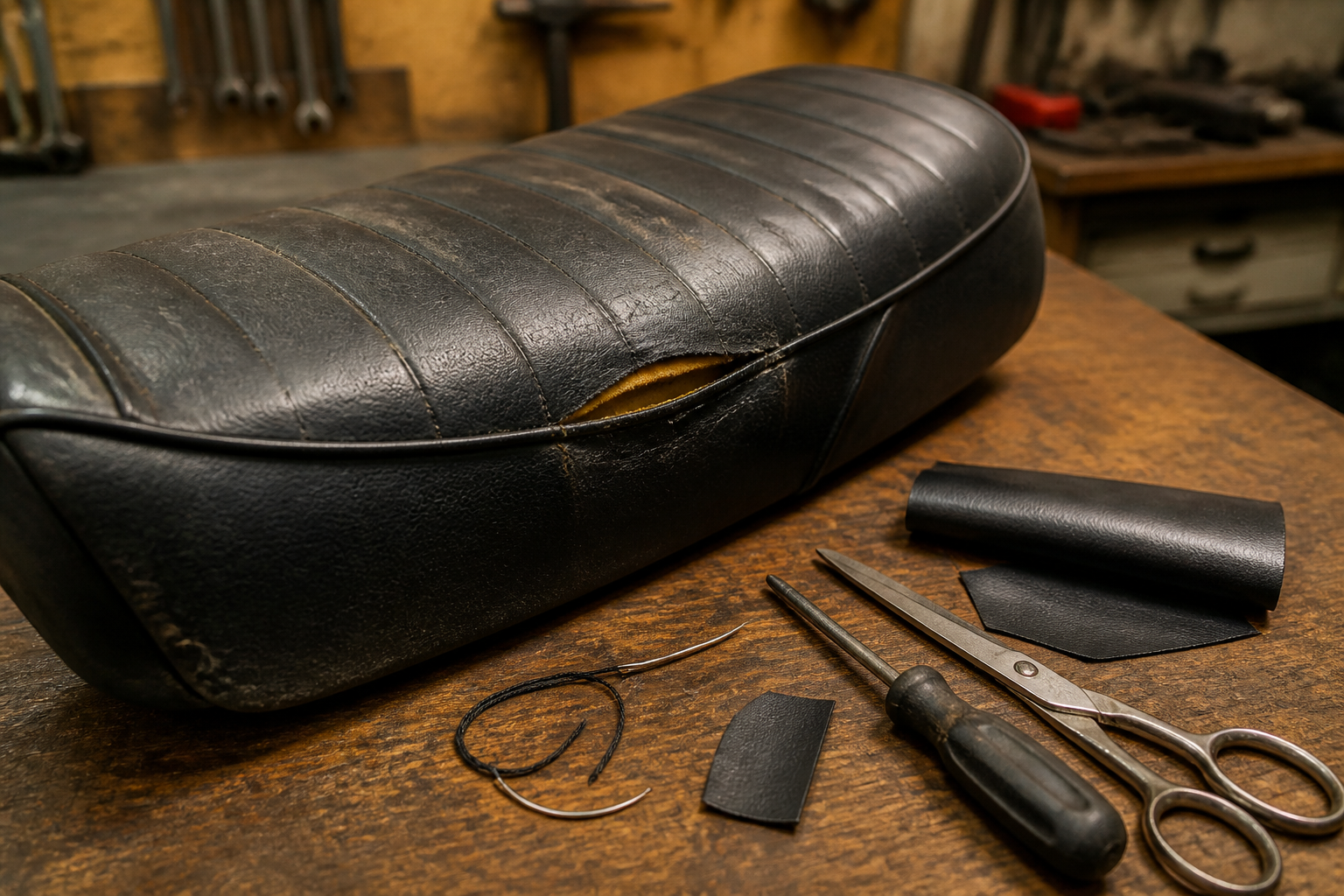
Vinyl Motorcycle Seat Repair: Why Patches Fail and What Actually Works
The Harsh Truth About Vinyl Seat Patches
Vinyl repair kits sound promising on the shelf, but they rarely outlast a season of hard riding. The problem isn’t the patch itself—it’s the environment. A motorcycle seat endures constant flexing, temperature swings, UV exposure, and rain. Even the most durable patch kit is fighting a losing battle. The adhesive weakens, the patch lifts at the edges, and within months you’re staring at the same damage, plus adhesive residue that’s harder to clean than the original tear.
Super Glue and filler compounds have the same fate. They work for an hour, maybe a week. But bike seats move. Leather and vinyl bend with every shift of weight, every corner, every stop. A rigid repair can’t flex with the material, so it cracks and separates while the original tear gets worse underneath.
Why Motorcycle Seats Demand More Than DIY Patches
Bicycle seats and car seats sit still. Motorcycle seats are active. The rider’s weight constantly redistributes. The seat stretches and compresses hundreds of times per ride. That dynamic stress is exactly what kills amateur repairs. Professional upholsterers understand this—they don’t just patch; they replace the damaged section entirely, restitching seams and ensuring the new material flexes with the rest of the cover.
Small cracks and scuffs are different from active tears. A crack that hasn’t split the vinyl completely might benefit from a durable vinyl filler and sealant, applied meticulously and cured properly. But once the vinyl is torn through, you’ve exposed the foam underneath. Water gets in. The foam deteriorates. A patch over a wet, decaying foam base won’t hold.
Professional Repair: When It’s Worth the Cost
A professional upholstery shop can recover your seat—replacing just the vinyl covering—for roughly two-thirds the cost of a brand-new seat. Recovering a seat takes 2 to 4 hours of labor depending on the design complexity. The upholsterer removes the old vinyl, inspects and reshapes the foam if needed, then installs marine-grade vinyl or genuine leather, stretching it tight and restitching all seams to factory standards.
Major motorcycle seat manufacturers like Mustang Seats offer repair and recovering services directly. They inspect the damage, give you a free estimate, and handle the work with warranty coverage on their own products. Their rates are transparent, and they cover return shipping. If you own a popular bike with factory seat options, this is often faster and cheaper than hunting for a local upholsterer.
For local shops, ask for references from other riders. A good upholsterer will show you fabric samples, explain the difference between vinyl grades (marine-grade vinyl is tougher than standard), and let you choose colors and stitching patterns if you want customization.
The DIY Reupholstery Route
If you’re handy and have time, you can recover a seat yourself. You’ll need a staple gun, pliers, marine-grade vinyl fabric (buy about 6 feet for a typical bike seat—costs $20 to $30), and a heat gun or hair dryer to soften the vinyl before stretching. Total material cost is under $50; labor is mostly your time.
The process: remove the old staples, strip the old vinyl, apply new vinyl carefully while stretching it tight to avoid wrinkles, and staple it down underneath the base, folding corners neatly and overlapping seams. Use stretch vinyl like Morbern Allsport 360° Stretch Vinyl if possible—it forgives small patterning mistakes and lies smooth. Don’t use glue; proper stretching and stapling is stronger and lasts longer.
Precut vinyl covers for popular bikes are sold on eBay and specialty upholstery suppliers, designed to fit your exact seat shape. If you use a precut cover, installation drops to an hour of work. Check reviews carefully—cheap precuts wrinkle or tear during installation.
When a Small Touch-Up Is Actually Possible
Not every blemish needs a full recovery. Surface scuffs, small abrasions, and light scratches can be addressed with vinyl conditioner and protective wax. If vinyl is cracked but not torn, a fine-grit sandpaper (220 to 400 grit) can smooth the crack edges, and a vinyl repair compound—a colored, pliable filler designed for auto interiors—can fill the gap. Apply it carefully, let it cure fully per the product instructions, and seal it with clear vinyl protectant. This won’t survive a full season, but it’ll buy you time and looks better than bare damage.
Seam separation is different. If stitching has come undone at a seam edge, sewing it back with heavy-duty thread (use an upholstery needle) is a real repair. Stitched seams stay tight because thread flexes with the material.
Choosing Your Next Move
Ask yourself three questions: Is the seat torn or just scuffed? How many miles do you have left on this bike? Can you afford to take the seat to a shop, or would you rather DIY?
If the damage is a scuff, seal it and keep riding. If it’s a small tear and the seat has life left in it, a professional recovery is worth the money. If the foam is deteriorating or the damage is extensive, buying a new OEM seat or an aftermarket upgrade seat from a quality maker (Corbin, Saddlemen, Mustang) will give you better comfort and durability than even the best repair.
One last point: motorcycle seats fail from neglect as much as from impact damage. Regular cleaning, conditioning with vinyl protectant, and keeping the seat covered when the bike is parked extend its life dramatically. Prevention costs almost nothing and beats repair every time.