
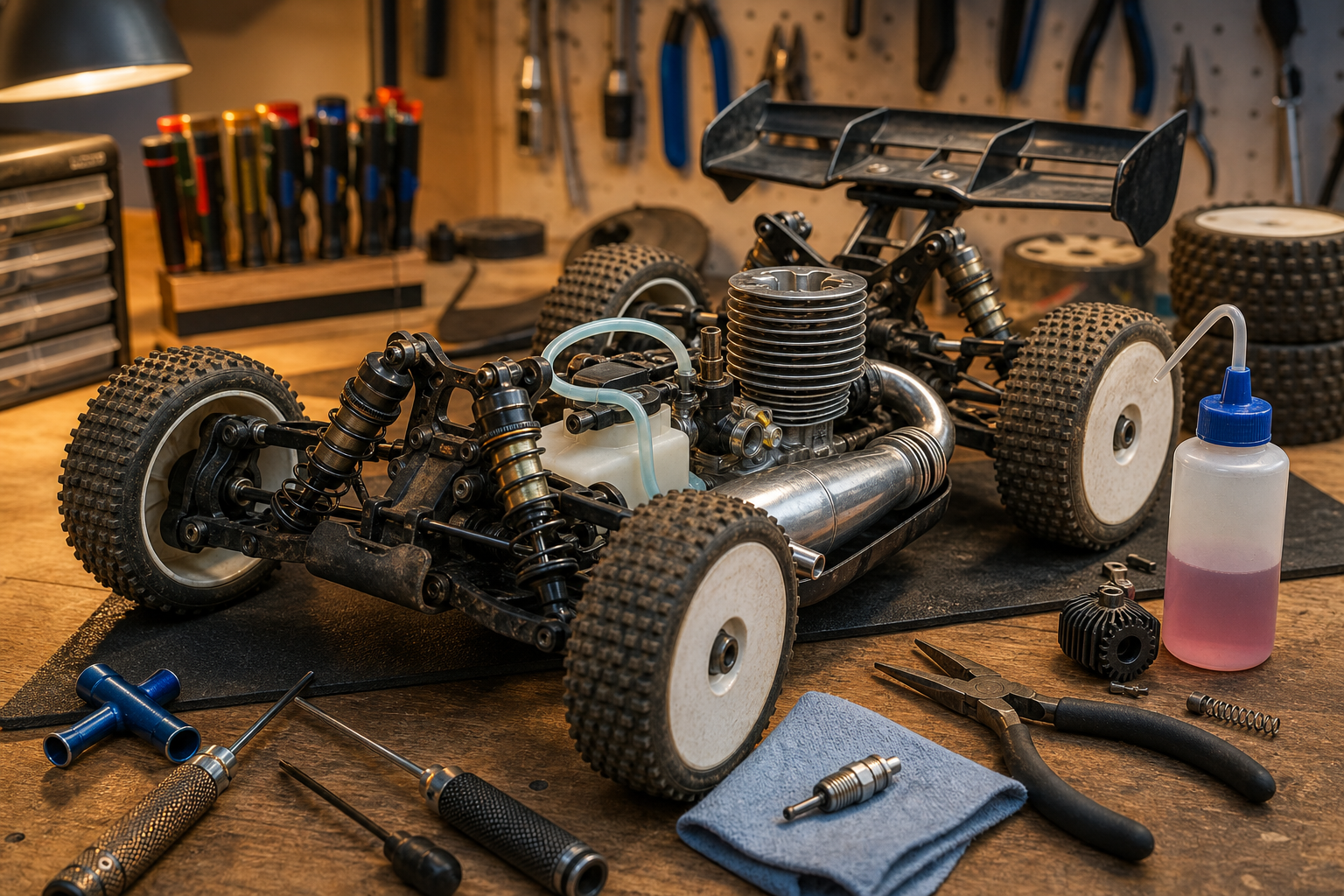
Kyosho Inferno Neo 3.0 Engine Swap: Options When You’ve Got a Lemon
What Went Wrong
You’re looking at a documented problem. Some Kyosho Inferno Neo 3.0 units shipped with multiple manufacturing defects: missing flywheel shim, unpainted cylinder head, and a tapered cylinder bore that’s too tight to allow the piston full travel. The receiver failure makes it worse, but the engine issues are the showstopper.
The KE21SP 3.5cc engine that comes in the Neo 3.0 should be reliable. When it isn’t, the fault is almost always production variance, not design.
Can You Just Swap in a Different Engine?
Technically yes. Practically, expect complications.
The Neo 3.0’s engine compartment is designed around the KE21SP’s footprint, bolt pattern, and exhaust port location. Any swap requires you to match several things: the engine mount pattern, the flywheel type, the exhaust manifold shape (rear-mount vs. side-mount), the carburetor throat diameter to your air filter, and the starting system. Get one wrong and you’re either building custom mounts or buying a second buggy.
Other Kyosho-compatible engines exist—KE25SP, GRX28 variants, and some third-party Zenoah or OS options work in specific configurations—but none drop in without modification. Kyosho engine mounts are proprietary to Kyosho models; you can’t assume compatibility across different buggy platforms.
Your Realistic Options
Option 1: Warranty claim (best first move). You got a defective unit out of the box. Kyosho offers warranty support on manufacturing defects. Reaching them is harder than it should be (your frustration is valid), but try their official support page or go through the retailer where you bought it. A replacement engine or buggy swap beats any DIY repair.
Option 2: Engine-only replacement from Kyosho. If warranty doesn’t cover it or you’ve missed the window, Kyosho sells the KE21SP separately. A new engine from a different production batch costs less than adapting a foreign engine and mounting hardware. You keep your receiver and everything else.
Option 3: Rebuild the stock engine (if you’re patient). The egg-shaped cylinder issue you’re seeing is partly tight tolerances in a new engine. Warming the engine block to 180–200°F with a heat gun can expand the metal enough to free up the piston. Combined with fresh glow plugs (factory plugs are often weak on new Kyosho engines) and proper break-in on the first tank, many Neo 3.0s that won’t crank initially do come to life. This isn’t a fix for missing shims or defective receivers, but if the core engine is sound, it might be worth trying before scrapping it.
Option 4: Engine swap with heavy modifications. If you want to go this route, you’re looking at custom engine mounts, possible carburetor adaptation, exhaust manifold machining, and testing. Figure on 4–8 hours of fabrication work and parts costs that rival buying a replacement engine. Only pursue this if you’re genuinely into engine work and have the tools. The payoff is learning, not practicality.
The Receiver Problem
That’s separate from the engine and potentially simpler to fix. The Neo 3.0 ships with a Kyosho Syncro KR-331 receiver. If it’s non-functional, Kyosho sells replacements. This is a $50–100 fix, not a $300 replacement buggy situation. Don’t conflate it with the engine problem.
Bottom Line
If you own a bad unit, warranty is your path. If that’s closed, a fresh KE21SP engine is cheaper and faster than swapping in something else. Heavy modifications (custom mounts, manifold work) make sense only if you enjoy that kind of fabrication. The egg-shaped cylinder and missing shim are real defects, not design quirks—don’t blame yourself for not getting it running.
Sources
- amainhobbies.com
- rc.kyosho.com
- rcnewb.com
- rctech.net
- radiocontrol.fandom.com
- wheelspinmodels.co.uk
- kyoshoamerica.com