
The Complete Guide to Potato Salad: Techniques, Styles, and Why Your Potatoes Matter
Why Potato Choice Matters More Than You Think
The difference between a potato salad that holds together and one that turns into mush comes down to starch content. Waxy potatoes like red potatoes, fingerlings, and new potatoes have low starch and high moisture, which means they keep their shape when boiled. Starchy varieties like Russets and Idaho potatoes absorb too much water and break apart easily. For potato salad, stick with waxy or all-purpose potatoes cut into uniform pieces—they’ll cook evenly and won’t fall apart when you fold in dressing.
Cook them just until fork-tender in salted water. Overcooking is the culprit behind most potato salad failures.
The American Creamy Style vs. German Vinegar Traditions
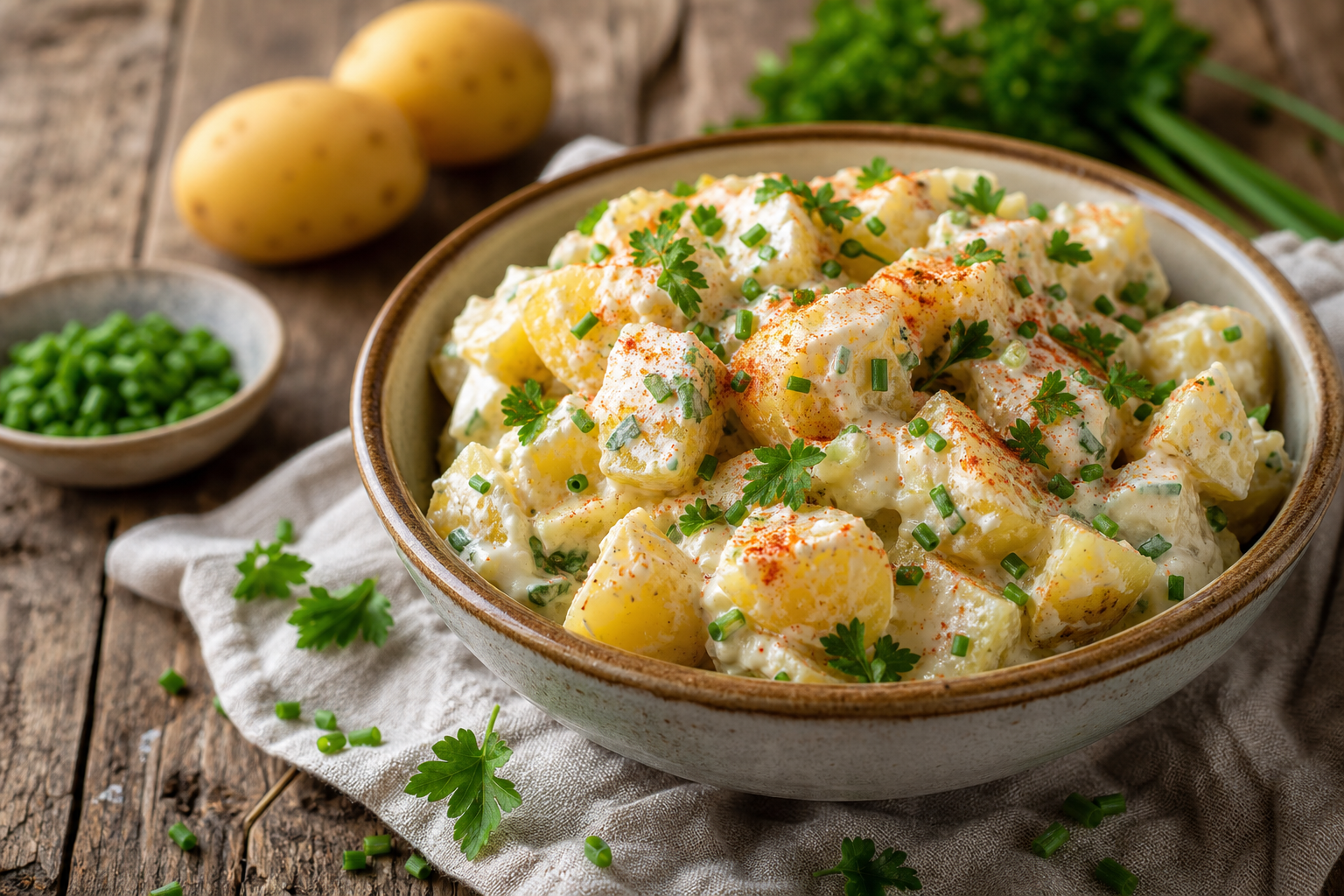
Potato salad splits into two main camps, each with its own logic. American potato salad is creamy and cold, bound with mayonnaise, sour cream, or both. It typically includes hard-boiled eggs, pickles or pickle relish, onions, and sometimes celery. The cool thing is how flexible it is—load it with bacon and cheddar for a baked-potato version, or keep it simple with just mayo and mustard. Southern American versions often lean yellow from mustard, while other regions prefer white.
German potato salad, especially the Southern German (Swabian) style, takes a different path. It’s typically served warm and uses a vinegar-based dressing with broth, mustard, and bacon grease. Northern German versions use mayonnaise more like Americans do, but still taste different—sometimes mixed with sour cream and garnished with egg and pickles. The warm, tangy approach lets potatoes absorb flavor better than cold-tossing ever could.
Temperature Timing: A Key Detail Many Miss
Here’s where technique changes everything. For mayonnaise-based salads, wait until potatoes are completely cool before adding the dressing—mayo can separate if it hits warm potatoes. But for vinegar dressings? Do it the opposite way. Toss warm potatoes with vinegar dressing so they absorb the flavors while they’re still porous. This is why German potato salad tastes so punchy: the warm potatoes drink in the tangy liquid.
The Texture Question: Chunky, Mashed, or Something Else
You mentioned some people like lumpy and others prefer silky—that’s a real choice, not a mistake. Cut your potatoes into roughly half-inch pieces and keep them intact for textured results. If you want creamier texture without mashing, you can blend a small portion of the cooked potatoes with mayo and dressing, then fold that back into the whole pieces. This gives you creamy binding with some structure still intact. For truly mashed potato salad (less common, but it exists), cube your potatoes smaller and stir them into the dressing more aggressively until they break down partially.
Beyond the Basics: What You Can Add
Pickles and pickle relish are standard for reason—the acid cuts through mayo and adds complexity. Yellow mustard brings tang. Celery adds crunch. Hard-boiled eggs provide richness. But you can build from there: fresh dill or parsley brighten it up, a touch of sugar balances vinegar-based versions, crispy bacon adds smoke, sharp cheddar makes it richer, or sliced radishes give bite. The baseline recipe can anchor a thousand variations.
Storage and Serving
Mayo-based potato salad keeps well refrigerated for 3 to 4 days. Make it a day ahead if you can—flavors improve as they meld. Vinegar-based salads also hold up well and can be served at room temperature, which makes them better for outdoor eating where mayonnaise can separate in heat. Stir gently before serving so you don’t break the potatoes down further.